Information design, interactive publishing & educational resource development
The project began as a printed resource, but the volume and complexity of the information made an interactive version a natural evolution.
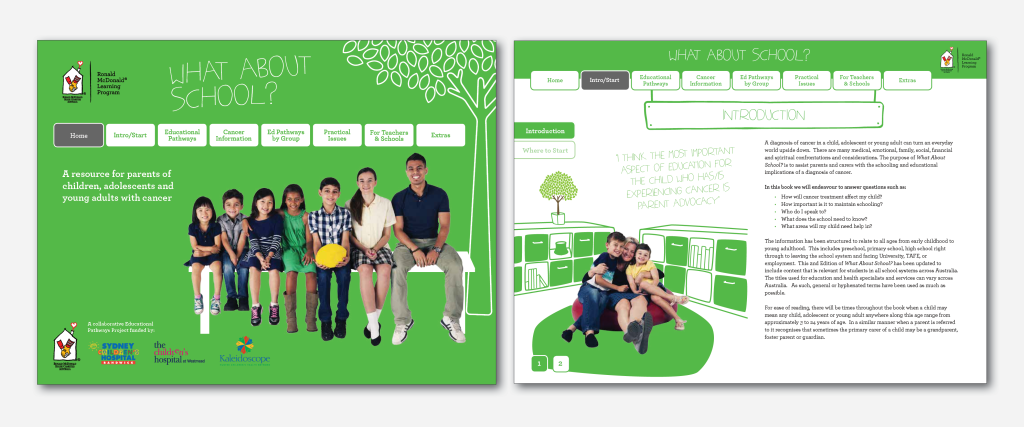
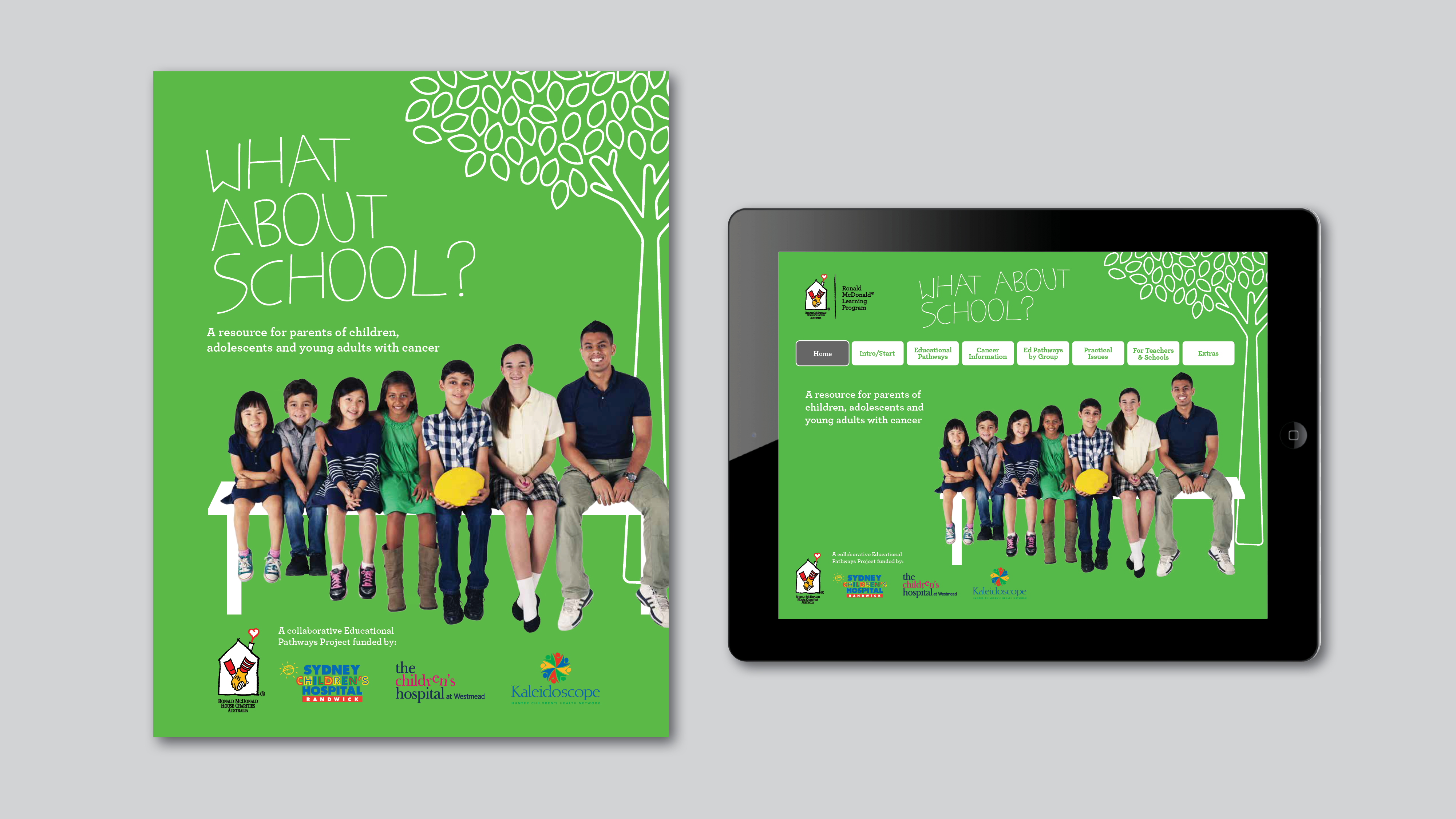
I developed the creative concept around the importance of imagination and play in children’s learning and development. Children experiencing serious illness still need opportunities to play, explore and imagine, not simply to focus on treatment or catching up on missed schoolwork. That idea became the visual language for the resource, placing real children within illustrated environments that could move between the practical realities of education and a more playful, imaginative world.
Creating that imagery became a substantial project in itself. We produced the photography specifically for the resource, casting children across the full age range from preschool through to university age and ensuring the group reflected Australia’s cultural diversity. I coordinated the children and families, clothing, permissions and releases, photography and subsequent compositing required to bring the illustrated environments to life.
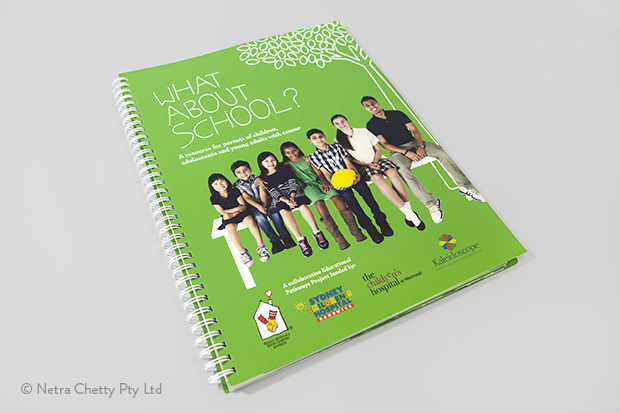
Designing the printed resource
The physical structure was integral to the solution. I developed a nested-book format that allowed different areas of content to be separated while remaining part of a single, cohesive resource. Parents, carers and educators could navigate directly to information relevant to their circumstances rather than having to work through a large linear publication.
Together, the format, photography, illustration and information design turned a substantial body of medical and educational content into something deliberately approachable, human and engaging for families navigating an already difficult experience.
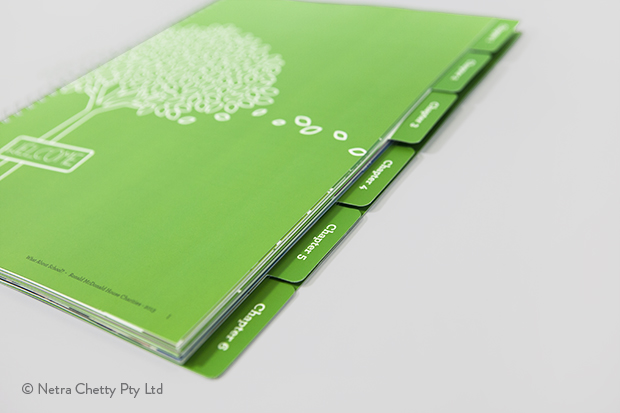
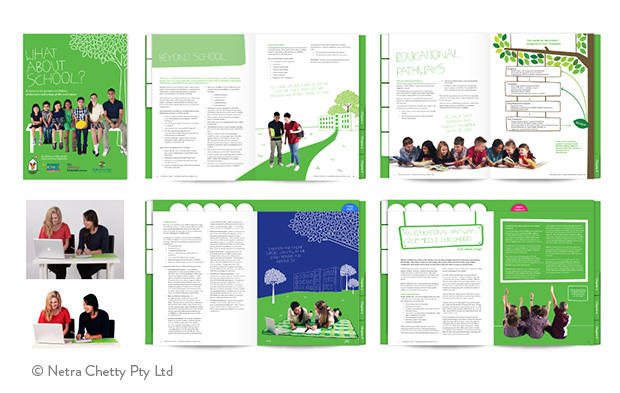
Extending the resource digitally
Some time after the printed resource was produced, I was asked to develop What About School? as a digital resource.
Rather than simply reproducing the printed book as a PDF, I redesigned the experience around the way the information could be navigated on screen.
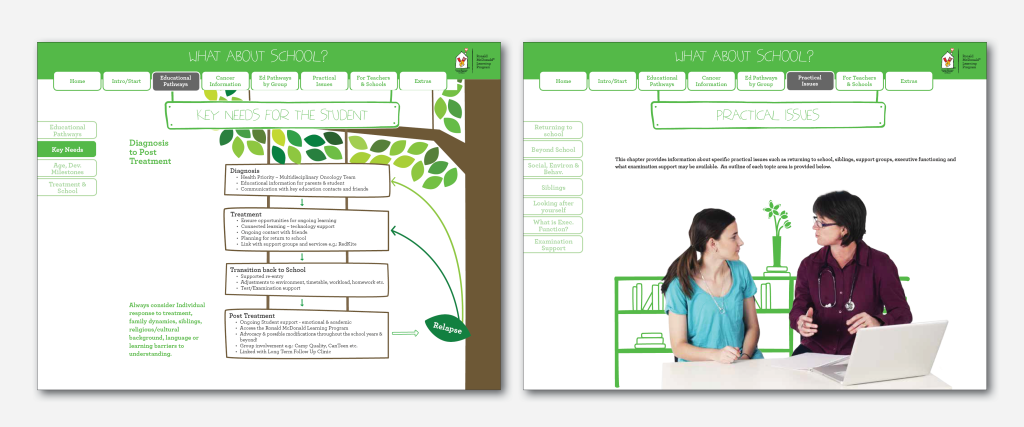
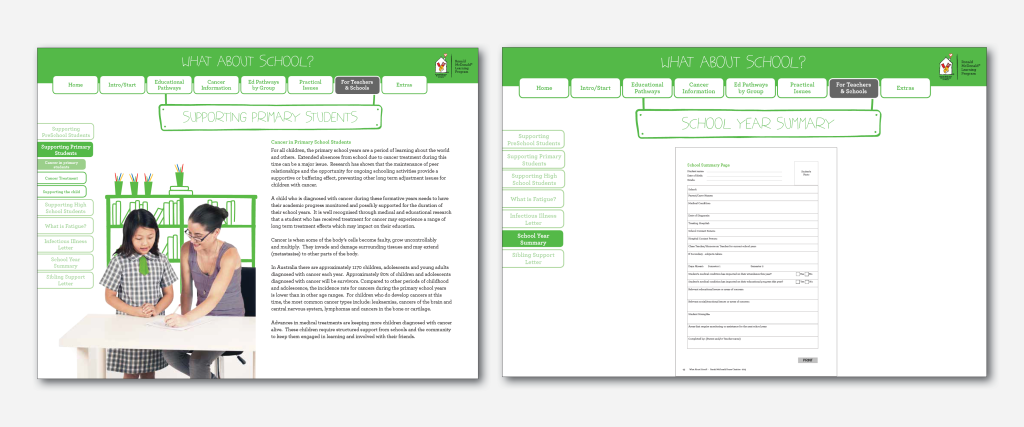
The resulting 136-page interactive PDF used persistent top-level navigation to provide direct access to major areas including Educational Pathways, Cancer Information, age-specific pathways, Practical Issues and resources for Teachers & Schools. Contextual navigation then changed within each section, allowing users to move progressively deeper into the information without losing their place in the broader resource.
This allowed someone to move according to their actual need, from an overall educational pathway into developmental milestones, returning to school or age-specific support, or directly into practical resources for teachers and schools.
The digital resource also incorporated practical tools that could be accessed independently and printed for use, including support letters and a School Year Summary designed to carry important information between parents, teachers, schools and healthcare contacts.
What began as a complex publication design problem ultimately became two different solutions to the same challenge: making an enormous body of specialist information easier for families and educators to understand, navigate and use.